Trataka Kriya - The Ancient Yogic Practice of Candle Gazing
What is Trataka Kriya?
In a world of fractured attention, endless notifications, and eyes that spend sixteen hours a day darting between screens – Trataka Kriya is perhaps the most quietly radical practice available to us.
Trataka Kriya is one of the six classical Shatkarmas – the purification practices of Hatha Yoga described in the Hatha Yoga Pradipika, one of the foundational texts of the entire yogic tradition. The word “Trataka” comes from the Sanskrit root “Trat” – meaning to look or to gaze. “Kriya” means a purification action or a practice performed with specific intention and technique.
Together, Trataka Kriya means: a deliberate, sustained, unblinking gaze upon a fixed point – practiced with complete stillness of the body, the breath, and the mind.
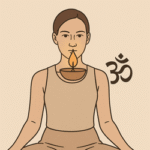
In its most classical and widely practiced form, the fixed point is a flame – a single candle placed at eye level, approximately sixty to ninety centimetres from the face. The practitioner gazes at this flame without blinking for as long as possible, maintaining an absolutely still body and an absolutely present mind. When the eyes begin to water – which they will, naturally, as the eyes self-cleanse – the gaze is maintained. When the eyes can no longer hold without blinking, they are gently closed. The practitioner then visualises the afterimage of the flame at the point between the eyebrows – the Ajna chakra – for as long as the image remains. Then the eyes are opened again, and the gaze resumes.
This cycle – open-eyed gazing, inner visualisation, open-eyed gazing again – constitutes one complete session of Trataka Kriya. A session may last anywhere from ten to thirty minutes depending on the stage of the practitioner.
What sounds, at first description, like staring at a candle is, in practice, one of the most profoundly demanding and profoundly rewarding concentration practices in the entire system of yoga. It demands everything your mind has – and in doing so, it reveals exactly how undisciplined that mind currently is, and exactly how it can be trained.
At Sadhak Yogpeeth in Dehradun, Trataka Kriya is taught as part of our classical yoga curriculum – with proper preparation, correct technique, and the depth of context that this ancient practice genuinely deserves.
The Two Types of Trataka — Bahiranga and Antaranga
Classical yoga texts describe two distinct forms of Trataka Kriya, and understanding both is important before beginning the practice.
Bahiranga Trataka — External Gazing
Bahiranga means external. This is the form most people encounter first and the form practiced by the majority of students at Sadhak Yogpeeth in Dehradun.
In Bahiranga Trataka, the gaze is fixed upon an external object. The most classical object is a candle flame — chosen because its soft, luminous quality is gentle on the eyes, its slight natural movement trains the attention without strain, and its brightness creates a vivid afterimage that supports the transition into inner visualisation.
Other traditional objects used in Bahiranga Trataka include a black dot on a white paper or wall, the rising sun or moon at the horizon (practiced with great caution and only at specific times), a crystal or gemstone, a yantra or sacred geometric symbol, or a specific symbol such as the Om symbol.
For beginners, the candle flame is always the recommended starting point. It is forgiving, accessible, and produces the clearest results in the early stages of practice.
Antaranga Trataka — Internal Gazing
Antaranga means internal. This is the more advanced form of Trataka Kriya, practiced once Bahiranga Trataka has been established firmly over weeks or months.
In Antaranga Trataka, the eyes are closed and the gaze is directed inward — to the visualised image of the chosen object held at the Ajna chakra, the point between and slightly above the eyebrows. The practitioner maintains the mental image of the flame with complete steadiness, without the image dissolving, flickering, or being replaced by other thoughts or impressions.
Antaranga Trataka is significantly more difficult than external gazing. It requires the kind of concentration that can only be developed through sustained prior practice of the external form. It is the bridge between Trataka as a purification technique and Trataka as a gateway into deep meditative states.
At Sadhak Yogpeeth in Dehradun, students are guided into Antaranga Trataka only when their Bahiranga practice is genuinely stable — not as a milestone to rush toward, but as a natural deepening that happens in its own time.
How to Practice Trataka Kriya — Step-by-Step Instructions
Preparation
Choose a quiet, dark or dimly lit room where there are no drafts or air currents. A draft causes the candle flame to flicker erratically, which makes gazing genuinely difficult and can strain the eyes. Close all windows and fans before lighting the candle.
Place the candle on a stable surface at exactly eye level when you are seated. This is important — gazing upward or downward at the flame strains the neck muscles and the extraocular muscles of the eye, and will cause discomfort long before the eyes themselves are ready to rest. Measure eye level while seated in your practice position, then adjust the candle height accordingly.
Sit in a comfortable, stable seated posture — Sukhasana, Siddhasana, or on a chair if floor sitting is not accessible. The spine should be upright, the shoulders relaxed, and the body absolutely still. The distance from the eyes to the flame should be approximately sixty to ninety centimetres — close enough to see the detail of the flame clearly, far enough that the heat and smoke are not an irritant.
Remove glasses or contact lenses before beginning. Contact lenses in particular reduce the natural tear flow that is an important part of Trataka’s cleansing effect on the eyes.
Take a few minutes in stillness before beginning. Close the eyes, take five to ten slow, deep breaths, and allow the mind to arrive in the room. Beginning Trataka from a distracted, rushing state produces very little. Beginning from stillness produces everything.
The Practice
Open your eyes and bring your gaze to the tip of the flame — specifically to the point just above where the flame emerges from the wick, at the base of the bright luminous zone. This is the most stable, least flickering point of the flame and the most productive point for the gaze.
Do not stare aggressively. The gaze in Trataka Kriya is relaxed and receptive — not a forced, effortful stare, but a soft, open, continuous attention. Imagine receiving the light of the flame rather than piercing it with your eyes.
Do not blink. This is the central instruction and the central challenge of Trataka. The natural blink reflex is deeply conditioned and will assert itself repeatedly in the early stages of practice. Gently resist it. When the need to blink becomes genuinely strong, allow one deliberate, slow blink and return the gaze. Over weeks of practice, the interval between blinks will lengthen naturally.
When the eyes begin to water — which is normal, healthy, and actually one of the primary mechanisms through which Trataka purifies the eyes — maintain the gaze. The watering is not a sign to stop. It is the practice working. Tears carry away accumulated deposits in the tear ducts and on the surface of the eye, making the eyes clearer, brighter, and more sensitive over time.
When you can genuinely no longer maintain the gaze without blinking repeatedly, gently close the eyes. Direct the inner gaze to the Ajna chakra — the point between the eyebrows — and hold the afterimage of the flame there with complete attention. Hold it steady. Watch it shift in colour — typically from yellow-white to blue, then green, then orange or red, then fading. When the afterimage has completely dissolved, open the eyes and resume the external gaze.
Duration and Progression
Beginners should practice Trataka Kriya for five to ten minutes in total per session, including both the external gazing and the inner visualisation phases. This is enough to feel the effects clearly without straining the eyes in the early weeks.
Over a period of six to eight weeks of regular daily practice, the duration can be gradually extended to fifteen to twenty minutes. Advanced practitioners under qualified guidance may extend sessions to thirty minutes or more.
The most important principle governing duration is this: extend the practice only when the previous duration has become genuinely comfortable — when the eyes are not strained at the end of the session and the concentration is actually deepening rather than fragmenting. Pushing beyond genuine readiness is counterproductive in Trataka more than in almost any other practice.
After the Practice
After completing Trataka Kriya, extinguish the candle. Rub the palms together vigorously until they generate warmth, then cup them gently over the closed eyes — a technique called Palming, which deeply relaxes the extraocular muscles and the optic nerves after the sustained effort of the practice.
Splash the eyes gently with cool, clean water. This completes the physical cleansing aspect of the practice and refreshes the eyes.
Sit for a few minutes in stillness with the eyes closed before resuming any activity. This integration period allows the nervous system to absorb the effects of the practice rather than immediately dissipating them in activity.
The Practice
Open your eyes and bring your gaze to the tip of the flame — specifically to the point just above where the flame emerges from the wick, at the base of the bright luminous zone. This is the most stable, least flickering point of the flame and the most productive point for the gaze.
Do not stare aggressively. The gaze in Trataka Kriya is relaxed and receptive — not a forced, effortful stare, but a soft, open, continuous attention. Imagine receiving the light of the flame rather than piercing it with your eyes.
Do not blink. This is the central instruction and the central challenge of Trataka. The natural blink reflex is deeply conditioned and will assert itself repeatedly in the early stages of practice. Gently resist it. When the need to blink becomes genuinely strong, allow one deliberate, slow blink and return the gaze. Over weeks of practice, the interval between blinks will lengthen naturally.
When the eyes begin to water — which is normal, healthy, and actually one of the primary mechanisms through which Trataka purifies the eyes — maintain the gaze. The watering is not a sign to stop. It is the practice working. Tears carry away accumulated deposits in the tear ducts and on the surface of the eye, making the eyes clearer, brighter, and more sensitive over time.
When you can genuinely no longer maintain the gaze without blinking repeatedly, gently close the eyes. Direct the inner gaze to the Ajna chakra — the point between the eyebrows — and hold the afterimage of the flame there with complete attention. Hold it steady. Watch it shift in colour — typically from yellow-white to blue, then green, then orange or red, then fading. When the afterimage has completely dissolved, open the eyes and resume the external gaze.
Duration and Progression
Beginners should practice Trataka Kriya for five to ten minutes in total per session, including both the external gazing and the inner visualisation phases. This is enough to feel the effects clearly without straining the eyes in the early weeks.
Over a period of six to eight weeks of regular daily practice, the duration can be gradually extended to fifteen to twenty minutes. Advanced practitioners under qualified guidance may extend sessions to thirty minutes or more.
The most important principle governing duration is this: extend the practice only when the previous duration has become genuinely comfortable — when the eyes are not strained at the end of the session and the concentration is actually deepening rather than fragmenting. Pushing beyond genuine readiness is counterproductive in Trataka more than in almost any other practice.
After the Practice
After completing Trataka Kriya, extinguish the candle. Rub the palms together vigorously until they generate warmth, then cup them gently over the closed eyes — a technique called Palming, which deeply relaxes the extraocular muscles and the optic nerves after the sustained effort of the practice.
Splash the eyes gently with cool, clean water. This completes the physical cleansing aspect of the practice and refreshes the eyes.
Sit for a few minutes in stillness with the eyes closed before resuming any activity. This integration period allows the nervous system to absorb the effects of the practice rather than immediately dissipating them in activity.
What Does Trataka Kriya Actually Do? - The Effects, Explained
Purification of the Eyes
This is the primary function of Trataka within the Shatkarma system. The sustained unblinking gaze stimulates tear production, which flushes the tear ducts and the surface of the eye. This is why the eyes water during practice — not because they are being harmed, but because they are being cleansed. Regular practitioners of Trataka Kriya consistently report clearer, brighter eyes, a significant reduction in eye strain and dryness, and improved visual acuity over months of consistent practice.
The optic nerves are also strengthened through the regular, controlled exercise of holding a focused gaze. Many yoga texts describe Trataka as beneficial for conditions arising from weak or fatigued optic function — conditions that are increasingly common in our screen-saturated modern lives.
Important note: Trataka Kriya is a supplementary practice and not a medical treatment. Students with diagnosed eye conditions — glaucoma, retinal detachment, severe myopia, or any inflammatory eye condition — should consult their eye specialist before beginning the practice.
Development of Concentration
This is the most significant benefit of Trataka Kriya from the perspective of yoga — and the benefit most relevant to students in Dehradun who are dealing with the fractured attention of modern digital life.
Trataka is, at its core, a training program for the faculty of concentration. Every time the gaze wavers, every time a thought arises and the mind follows it, every time the attention slips from the flame to the surroundings — the practice demands a return. This return, performed hundreds of times in a single session, is not a failure. It is the exercise. The mind is being trained, repetition by repetition, to hold single-pointed attention for progressively longer periods.
Students who practice Trataka Kriya consistently report measurable improvements in their ability to focus at work, in study, in conversation, and in every other cognitive task that requires sustained attention. In a world that has systematically fragmented human concentration through smartphones and notifications, Trataka offers a direct and ancient antidote.
Calming of the Nervous System
The sustained stillness of Trataka — the completely motionless body, the rhythmic slow breath, the unwavering gaze — produces a profound calming of the nervous system that is qualitatively different from ordinary relaxation.
The fixed gaze itself has a direct neurological effect. When the eyes are still and the visual field is stable, the brain’s threat-detection network quiets. The vestibular system settles. The amygdala — the brain’s alarm centre — reduces its activity. Students describe the state that Trataka produces as a deep, alert stillness — not drowsiness, not ordinary calm, but a quality of clear, present, undisturbed awareness that is the specific hallmark of advanced concentration practice.
Activation of the Ajna Chakra
In the classical yogic framework, Trataka Kriya is understood as one of the most direct practices for activating and developing the Ajna chakra — the energy centre located between the eyebrows that governs intuition, inner vision, clarity of perception, and the capacity for meditation.
The sustained inner gaze at the Ajna point during the visualisation phase of Trataka is understood to stimulate the pituitary and pineal glands — which sit in the corresponding anatomical region — and to awaken the dormant capacities of inner vision and insight that classical yoga associates with this centre.
Whether approached through the lens of classical yoga philosophy or through the lens of modern neuroscience, the effects that practitioners consistently report — heightened clarity, improved intuitive judgment, a deepening capacity for meditation, and an increasing quality of inner stillness — are real and well-documented.
:Gateway to Dhyana — Meditation
Perhaps the most important long-term benefit of Trataka Kriya is its function as a direct gateway into meditation. Many students who struggle with seated meditation — who find that closing the eyes leads immediately to a cascade of thoughts, fantasies, and restlessness — discover that Trataka provides the missing bridge.
Trataka gives the mind an object. It trains the mind to hold that object steadily. It develops, through external practice, the exact faculty of one-pointed attention that meditation requires. Students who establish a regular Trataka practice consistently find that their seated meditation becomes deeper, more stable, and more accessible — because the concentration required for meditation has been systematically developed through the gazing practice.
Common Mistakes in Trataka Kriya - What to Avoid
Gazing too aggressively — The gaze in Trataka should be relaxed and receptive, not a tense, effortful stare. Aggressive gazing strains the extraocular muscles and produces headaches rather than clarity. Soften the gaze while maintaining the stillness.
Practicing in a draft — An unstable, flickering flame caused by air currents makes sustained gazing genuinely difficult and can strain the eyes. Always practice in a draft-free room.
Incorrect candle height — Gazing upward or downward at the flame strains the neck and the eyes. Eye level is non-negotiable. Measure and adjust before every session.
Stopping when the eyes water — Watering is the practice working, not a signal to stop. Many beginners stop precisely at the moment when the practice is becoming most effective. Maintain the gaze through the watering unless there is genuine discomfort.
Rushing the duration — Practicing for thirty minutes in the first week is not advanced practice. It is harmful practice. Build duration slowly, guided by genuine comfort rather than ambition.
Skipping the inner visualisation phase — The alternation between external gazing and internal visualisation is not optional. The inner phase is where the concentration practice deepens from sensory engagement into genuine mental training. Both phases are essential.
Practicing without preparation — Beginning Trataka from a rushed, distracted state produces very little. The few minutes of breath-based settling before the gaze begins are not optional — they are what make the practice productive
Frequently Asked Questions
Is Trataka Kriya the same as candle gazing meditation? Trataka Kriya and candle gazing meditation are related but not identical. Trataka Kriya is the classical Shatkarma practice with a specific, codified technique — including the alternation between external and internal gazing, specific duration guidelines, prescribed preparation and aftercare, and a defined place within the classical Hatha Yoga system. Candle gazing meditation, as commonly described in modern wellness contexts, is typically a simplified version that captures part of the benefit of Trataka without the full technical precision of the classical practice. At Sadhak Yogpeeth in Dehradun, we teach the classical Trataka Kriya in its complete, traditional form.
Will Trataka Kriya actually improve my eyesight? The classical texts attribute significant benefits to the eyes from regular Trataka practice — stronger optic nerves, clearer vision, reduced eye strain, and improved tear function. Many long-term practitioners report real improvements in eye health and a reduction in dryness and fatigue. However, Trataka Kriya is a Shatkarma — a purification practice — and is not a medical treatment for diagnosed refractive errors like myopia or hyperopia. Approach it as a powerful complementary practice for eye health and overall concentration, and maintain your relationship with your eye specialist for any specific medical concerns.
How long does it take to see results from Trataka Kriya? Most students notice effects on their concentration and the quality of their mental stillness within two to three weeks of daily practice. Improvements in eye clarity and a reduction in screen-related eye strain typically become noticeable within four to six weeks of consistent practice. The deeper benefits — heightened intuitive clarity, more stable meditation, and the specific awakening of the Ajna centre that classical yoga describes — develop over months of sustained, regular practice. Trataka is not a quick result practice. It is a long-term investment in the quality of your attention.
Can I practice Trataka Kriya at home, or do I need to come to a studio? Once you have learned the correct technique from a qualified teacher, Trataka Kriya can absolutely be practiced at home. In fact, daily home practice is strongly encouraged — the effects of Trataka accumulate through consistent daily repetition far more than through occasional studio sessions. However, beginning the practice without proper instruction — particularly without understanding the correct gaze point, the correct duration progression, and the specific cautions — produces inconsistent results and risks the eye strain that incorrect technique can cause. Learn it correctly first, then take it home.
Is Trataka Kriya connected to Tratak in Tantra or in other traditions? Trataka or Tratak in its various forms appears across multiple Indian traditions — in Tantra, in various sampradayas of Shaivism and Shaktism, and in certain Sufi and broader contemplative traditions. In all of these contexts, the sustained fixed gaze functions as a tool for concentration and for accessing non-ordinary states of awareness. The Shatkarma Trataka Kriya taught at Sadhak Yogpeeth in Dehradun is the classical Hatha Yoga form as documented in the Pradipika and the Gheranda Samhita — the most widely transmitted and best-documented form of the practice within the yoga tradition.
Can Trataka Kriya help with anxiety and sleep problems? Yes — and this is one of the most consistent reports from students who begin a regular Trataka practice at Sadhak Yogpeeth. The sustained stillness of Trataka directly activates the parasympathetic nervous system, quiets the anxiety-generating activity of the amygdala, and develops the capacity for mental stillness that is often absent in people struggling with anxiety. Sleep quality typically improves significantly within a few weeks of regular practice because the nervous system has learned, through Trataka, a new reference point for stillness. Many students who came to Trataka looking for an eye practice discovered that its effects on anxiety and sleep were the most transformative benefit they found.
👉 Hatha Yoga Pradipika – https://www.sacred-texts.com/hin/yog/index.htm
You can read this blog – https://sadhakyogpeeth.com/hatha-flow-yoga/