
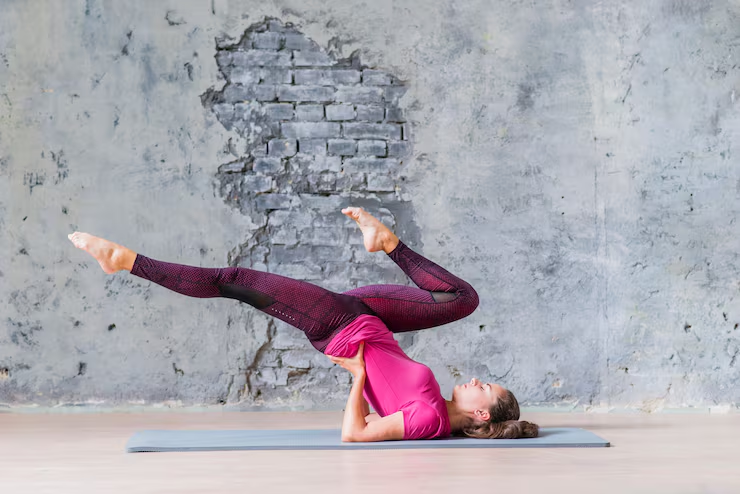
What is Ashtanga Yoga – The Meaning Behind the Name
If you have ever walked into a yoga studio and heard the word Ashtanga and wondered what it actually means – you are not alone. Ashtanga is one of the most powerful, structured, and transformative yoga systems in the world, yet it remains widely misunderstood by beginners and casual practitioners alike.
The word Ashtanga comes from two Sanskrit roots. “Ashta” means eight and “Anga” means limb. Together, Ashtanga literally means the eight limbs – a direct reference to the eight-limbed path of yoga described by the ancient sage Patanjali in the Yoga Sutras, one of the most foundational texts in all of yogic philosophy.
These eight limbs are Yama (ethical restraints), Niyama (personal observances), Asana (physical postures), Pranayama (breath control), Pratyahara (withdrawal of senses), Dharana (concentration), Dhyana (meditation), and Samadhi (complete absorption). Together they describe not just a physical practice but an entire way of living – a complete science of body, mind, and consciousness.
In modern usage, Ashtanga Yoga most commonly refers to the Ashtanga Vinyasa Yoga system developed and popularized by Sri K. Pattabhi Jois of Mysore, India in the twentieth century. This is a vigorous, structured, breath-synchronized practice built around a fixed sequence of postures — and it is this system that we explore in depth throughout this guide.
At Sadhak Yogpeeth near GMS Road, Dehradun, Ashtanga Yoga is taught as part of our complete yoga curriculum – honoring both its classical philosophical roots and its powerful practical application for modern students.
The Origins of Ashtanga Yoga – A Brief History
To truly understand what Ashtanga Yoga is, it helps enormously to understand where it comes from and who shaped it into the form practiced today.
The philosophical foundation of Ashtanga Yoga was laid by Patanjali, the ancient Indian sage who compiled the Yoga Sutras approximately 2,000 years ago. In these 196 aphorisms, Patanjali systematically described the eight-limbed path – Ashtanga – as the complete framework for achieving liberation from suffering and union of the individual consciousness with the universal.
The physical practice of Ashtanga Vinyasa Yoga as it is practiced in studios today was systematized by Sri Tirumalai Krishnamacharya and brought to the world through his most celebrated student, Sri K. Pattabhi Jois, who founded the Ashtanga Yoga Research Institute in Mysore, Karnataka in 1948. Pattabhi Jois taught this method for over sixty years, attracting students from across the world to Mysore – including many who went on to shape modern yoga globally.
The practice is built on a text called the Yoga Korunta – attributed to the ancient sage Vamana Rishi – which Krishnamacharya is said to have discovered and from which the six series of Ashtanga postures were derived. Whether historical fact or teaching story, the system that emerged is undeniably one of the most complete and demanding physical yoga practices ever codified. Go through this https://sadhakyogpeeth.com/
The Six Series of Ashtanga Yoga – What They Are and How They Work
One of the most distinctive features of Ashtanga Yoga is its fixed, progressive series structure. Unlike Vinyasa Yoga where sequences vary from class to class, Ashtanga Yoga follows the same set sequence every time – and this consistency is precisely what makes it so powerful as a transformative tool.
Primary Series — Yoga Chikitsa (Yoga Therapy) The foundation of the entire Ashtanga system. The Primary Series consists of approximately 75 postures specifically designed to detoxify and realign the body -opening the hips, lengthening the spine, building core strength, and establishing the breath-movement synchronization that defines the entire practice. Every student begins here, regardless of prior yoga experience or fitness level.
Intermediate Series — Nadi Shodhana (Nerve Cleansing) The second series focuses on purifying the nervous system through deep backbends, hip openers, and inversions that are significantly more demanding than the Primary Series. Students typically spend months or years mastering the Primary Series before progressing to the Intermediate.
Advanced Series A, B, C, and D — Sthira Bhaga (Divine Stability) The four Advanced Series represent the pinnacle of the Ashtanga system – requiring extraordinary strength, flexibility, balance, and years of consistent dedicated practice to access safely. Very few practitioners in the world reach the later Advanced Series, and those who do have typically dedicated decades to their practice.
At Sadhak Yogpeeth in Dehradun, our Ashtanga Yoga classes focus primarily on the Primary Series – the most therapeutically valuable and accessible entry point into this powerful system for students of all backgrounds and fitness levels.
The Tristhana Method – The Three Points of Attention
What makes Ashtanga Yoga fundamentally different from most other physical yoga styles is the Tristhana method – the simultaneous cultivation of three specific points of attention in every single posture and every single transition throughout the practice.
Breath — Ujjayi Pranayama Ashtanga Yoga uses a specific breathing technique called Ujjayi – often described as the victorious breath or the ocean breath. The breath is drawn in and out through the nose with a slight constriction at the back of the throat that creates a soft, steady sound like distant ocean waves. This breath generates internal heat, purifies the body from within, focuses the mind completely, and regulates the pace of the entire practice.
Bandhas — Energy Locks Two primary bandhas are engaged continuously throughout an Ashtanga practice. Mula Bandha is a contraction at the pelvic floor that roots and grounds the body’s energy. Uddiyana Bandha is a drawing in and lifting of the lower abdomen that supports the spine, protects the lower back, and directs prana – life force energy – upward through the body. Together they create an internal energetic container that makes every posture safer, deeper, and more powerful.
Drishti — Focused Gaze Every posture in the Ashtanga sequence has a specific prescribed gaze point – a Drishti. There are nine Drishtis in total, including the tip of the nose, the navel, the third eye, the thumbs, and the horizon. By fixing the gaze on a single, unmoving point, the mind is given one less distraction – and the quality of concentration in the practice deepens significantly.
The simultaneous practice of Ujjayi breath, Bandha engagement, and Drishti in every posture is what transforms Ashtanga Yoga from a physical exercise into a genuine moving meditation – and it is this quality that students at Sadhak Yogpeeth near GMS Road, Dehradun consistently describe as the most profound and distinctive aspect of the practice
What is Ashtanga Yoga Good For – The Real Benefits
Once you understand what Ashtanga Yoga is at its core, the question most students ask next is simple – what will it actually do for me? The answer is both wide-ranging and profound:
Benefit 1 — Extraordinary Physical Strength The continuous weight-bearing nature of Ashtanga Yoga – particularly the repeated Chaturangas, arm balances, and jump-throughs – builds functional strength across the entire body simultaneously. Students who practice consistently develop remarkable upper body, core, and leg strength that carries into every aspect of daily life.
Benefit 2 — Deep and Lasting Flexibility The progressive, repeated practice of the same fixed sequence means the body is systematically opened in the same intelligent order every session – creating deep, lasting flexibility that builds steadily over months and years rather than fluctuating session to session.
Benefit 3 — Detoxification Through Heat The combination of Ujjayi breathing, Bandha engagement, and continuous movement generates significant internal heat – producing deep sweating that helps the body eliminate toxins through the skin. This is one of the most distinctive and celebrated benefits of regular Ashtanga practice.
Benefit 4 — Mental Discipline and Focus The fixed sequence of Ashtanga Yoga means there is nothing new to learn, nothing to decide, and nowhere to hide. You simply show up and do the practice – day after day. This demands and simultaneously develops extraordinary mental discipline, focus, and the ability to remain present through physical and mental discomfort. These qualities transfer powerfully into every other area of life.
Benefit 5 — Nervous System Regulation The continuous Ujjayi breath practiced throughout every Ashtanga session directly stimulates the parasympathetic nervous system – reducing chronic stress hormones, improving sleep quality, and building the kind of deep, quiet resilience that most people spend their entire lives searching for.
Benefit 6 — Digestive and Organ Health The twists, forward folds, and abdominal compressions of the Primary Series systematically massage every major organ in the body – stimulating the liver, kidneys, intestines, and reproductive organs – significantly improving digestion, elimination, and overall organ function over time.
Benefit 7 — Spiritual and Philosophical Depth For students who go beyond the physical practice and engage with the complete eight-limbed path – including the Yamas, Niyamas, Pranayama, and meditation – Ashtanga Yoga becomes a complete system for living with greater awareness, integrity, and inner peace.
What is Ashtanga Yoga vs Vinyasa Yoga vs Hatha Yoga – The Key Differences
Understanding how Ashtanga Yoga relates to other major yoga styles helps students at Sadhak Yogpeeth in Dehradun make informed decisions about which practice best serves their current needs and goals.
Ashtanga Yoga vs Hatha Yoga Hatha Yoga is slow, deliberate, and focused on holding individual postures with breath awareness and alignment precision. Ashtanga Yoga is dynamic, continuous, and built around a fixed sequence of postures linked by breath and movement. Hatha is the ideal entry point for complete beginners. Ashtanga is best approached after some foundational practice – though motivated beginners can absolutely begin with the Primary Series under qualified guidance.
Ashtanga Yoga vs Vinyasa Yoga Vinyasa Yoga was directly inspired by Ashtanga – many of its foundational elements including Sun Salutations, Chaturanga, and the breath-movement synchronization come directly from the Ashtanga tradition. The key difference is that Vinyasa sequences vary from class to class and teacher to teacher, while Ashtanga always follows the same fixed series. Ashtanga is generally more structured, more physically demanding, and more traditionally rooted than most Vinyasa classes.
Which is Right for You? If you are seeking structure, progressive mastery, and a complete philosophical framework – Ashtanga Yoga is your practice. If you prefer variety, a moderate pace, and a more accessible entry point – Vinyasa or Hatha Yoga at Sadhak Yogpeeth near GMS Road, Dehradun will serve you beautifully as a starting point before progressing toward Ashtanga.
Learn Ashtanga Yoga at Sadhak Yogpeeth – Dehradun’s Complete Yoga Center
Understanding what Ashtanga Yoga is intellectually is only the very beginning. The real learning – the transformation that Ashtanga promises and delivers – only happens through consistent, guided practice on the mat under the eyes of a qualified, experienced teacher.
At Sadhak Yogpeeth near GMS Road, Dehradun, our certified yoga instructors bring deep knowledge of the Ashtanga Primary Series, its philosophical foundations, and its therapeutic applications to every class. We teach with precision, patience, and genuine care — ensuring every student builds their practice safely, progressively, and with real understanding of what they are doing and why.
Whether you are taking your very first step into the Ashtanga tradition or returning to deepen a practice you have already begun — Sadhak Yogpeeth offers the guidance, the comunity, and the environment your practice deserves.
Our flexible morning and evening batches make consistent attendance easy for students from across Dehradun – including GMS Road, Rajpur Road, Patel Nagar, Dalanwala, and Sahastradhara Road. And with over 1,100 active members already part of our community, you will never be practicing alone.
WhatsApp us at 9368777957 to book your trial class today – no prior Ashtanga experience required. Just bring a willingness to begin.
Who is Ashtanga Yoga For?
One of the most common misconceptions about Ashtanga Yoga is that it is only for young, flexible, already-fit people. This is simply not true. While the practice is physically demanding, the Primary Series is accessible to a far wider range of students than most people expect – when taught correctly and with appropriate modifications.
Ashtanga Yoga at Sadhak Yogpeeth in Dehradun is suitable for students who have some prior yoga experience and a genuine willingness to commit to a consistent, progressive practice. It is particularly well-suited for working professionals who want a structured, reliable practice they can develop independently over time. It suits fitness enthusiasts who want the discipline and physical results of serious training combined with the mental clarity and philosophical depth of authentic yoga. It works beautifully for intermediate and advanced practitioners who want to move beyond casual yoga classes into a complete, transformative system. And it is ideal for anyone drawn to the meditative, almost devotional quality of practicing the same sequence every day with deepening awareness and precision.
Complete beginners are welcomed at Sadhak Yogpeeth – our certified instructors teach the Primary Series progressively, introducing postures one at a time and building each student’s practice safely and sustainably from their very first session.
Who is Ashtanga Yoga For?
One of the most common misconceptions about Ashtanga Yoga is that it is only for young, flexible, already-fit people. This is simply not true. While the practice is physically demanding, the Primary Series is accessible to a far wider range of students than most people expect — when taught correctly and with appropriate modifications.
Ashtanga Yoga at Sadhak Yogpeeth in Dehradun is suitable for students who have some prior yoga experience and a genuine willingness to commit to a consistent, progressive practice. It is particularly well-suited for working professionals who want a structured, reliable practice they can develop independently over time. It suits fitness enthusiasts who want the discipline and physical results of serious training combined with the mental clarity and philosophical depth of authentic yoga. It works beautifully for intermediate and advanced practitioners who want to move beyond casual yoga classes into a complete, transformative system. And it is ideal for anyone drawn to the meditative, almost devotional quality of practicing the same sequence every day with deepening awareness and precision.
Complete beginners are welcomed at Sadhak Yogpeeth — our certified instructors teach the Primary Series progressively, introducing postures one at a time and building each student’s practice safely and sustainably from their very first session.
Frequently Asked Questions – What is Ashtanga Yoga?
What is the meaning of Ashtanga Yoga? Ashtanga means eight limbs in Sanskrit — referring to the eight-limbed path described by Patanjali in the Yoga Sutras. In modern practice, Ashtanga Yoga refers to the Ashtanga Vinyasa system developed by Sri K. Pattabhi Jois — a fixed, progressive, breath-synchronized sequence of postures practiced in the same order every session.
Is Ashtanga Yoga good for beginners? Yes — with the right guidance. The Primary Series of Ashtanga Yoga is designed to be learned progressively, posture by posture, under qualified instruction. At Sadhak Yogpeeth near GMS Road, Dehradun, our certified instructors introduce the practice safely and sustainably for complete beginners — building each student’s capacity gradually without overwhelming them.
How is Ashtanga Yoga different from Vinyasa Yoga? Ashtanga Yoga always follows the same fixed sequence of postures in the same order every session. Vinyasa Yoga varies the sequence from class to class. Ashtanga is generally more structured, more physically demanding, and more deeply rooted in classical yogic tradition than most modern Vinyasa classes.
How often should I practice Ashtanga Yoga? The traditional Ashtanga method involves practicing six days per week — resting on Saturdays and on moon days. For modern students beginning their practice, three to four sessions per week at Sadhak Yogpeeth in Dehradun is an excellent and sustainable starting point that delivers real, consistent results.
What is the Mysore style of Ashtanga Yoga? Mysore style is the traditional method of teaching Ashtanga Yoga in which each student practices the sequence at their own pace and breath — with the teacher moving around the room providing individual hands-on adjustments and verbal guidance. It is named after Mysore, Karnataka — the city where Pattabhi Jois taught for decades. Ask our instructors at Sadhak Yogpeeth about Mysore-style sessions in Dehradun.
Can Ashtanga Yoga help with weight loss? Yes. The Primary Series of Ashtanga Yoga is a physically demanding, heat-generating practice that burns significant calories, builds lean muscle, and improves metabolic function. Students who practice consistently three to four times per week alongside a balanced diet consistently report meaningful improvements in body composition, energy levels, and overall physical fitness.